
Fractal History
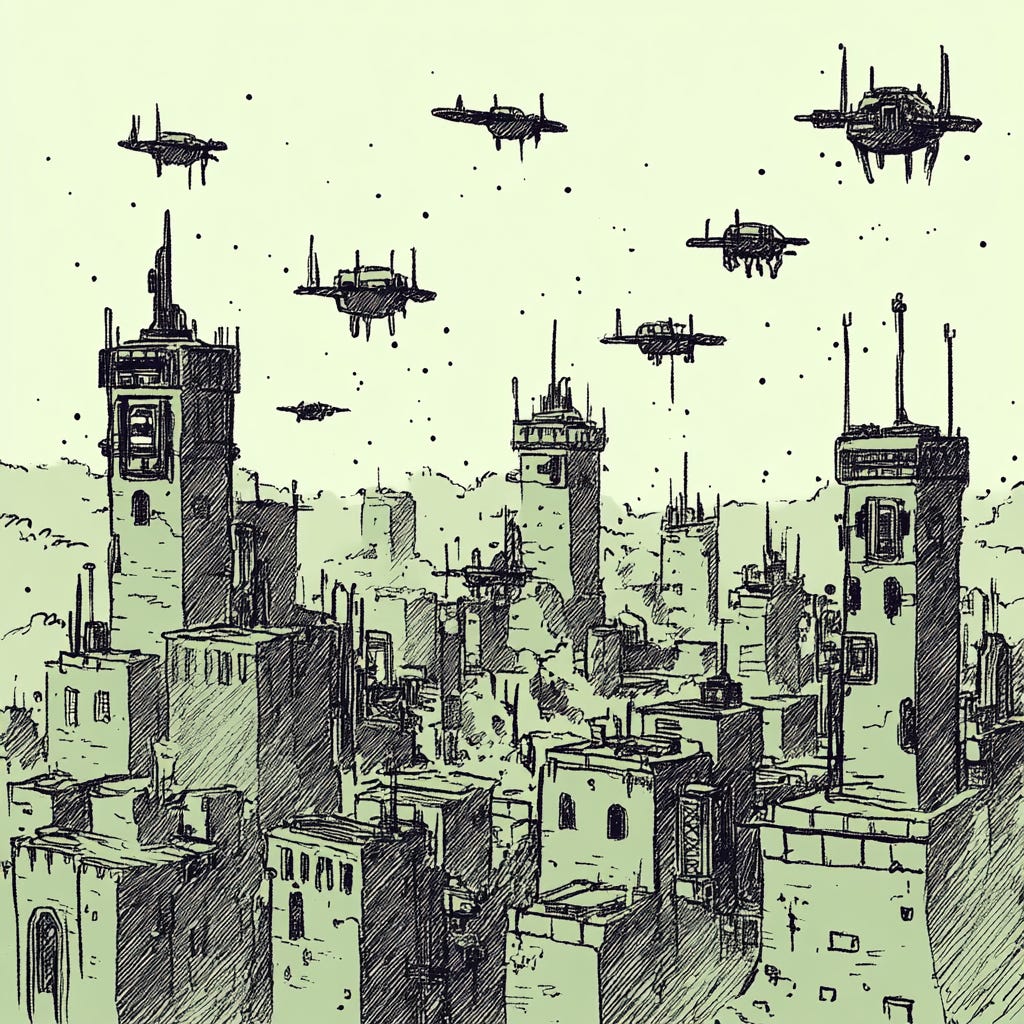
History does not repeat, but it fractures along the same fault lines. The splintering of the world into cryptographically secured enclaves, into automated fortresses and self-governing code, is not new—it is the digital echo of an older collapse, one written in the bones of empire. When Rome fell, it did not vanish in fire and ruin, but in a slow, grinding dissolution, an unraveling of authority that left power too distributed to be reclaimed. The legions were still there, the roads still stretched across continents, but the center could no longer impose its will. Taxation became unenforceable as local elites stopped paying tribute and redirected resources to their own defenses. The great cities, once bound by imperial administration, hardened into walled refuges governed by warlords, bishops, and mercenary captains. Trade fractured; currencies devolved into local variants, their value dictated by the trust networks of individual rulers rather than imperial decree. The Pax Romana had been underwritten by the state's ability to enforce order through military supremacy, but once that supremacy faltered—once the borders became too expensive to defend, once the legions became private armies loyal to whoever could pay them—sovereignty ceased to exist as a singular force. The Western Empire did not fall to an invasion; it decayed into a landscape of self-contained polities, each fortified, each suspicious of its neighbors, each governed by whoever could promise security in an age where law was no longer enforced from above. What followed was not chaos, but a new equilibrium of isolation: a world of castles, toll roads, and private militias.
The same dynamic played out when the Mongol Empire collapsed, when the Abbasid Caliphate fragmented, when the Holy Roman Empire became a patchwork of hundreds of microstates. Empires are maintained by centralization—by the ability to extract resources, enforce laws, and command armies from a single point of control. When that control breaks, not in one cataclysm but in the slow accumulation of dysfunction, the result is always the same: power dissolves downward, not upward. Decentralization is not an innovation but an inevitability, a return to the historical baseline of a world without enforced unity. But this time, the process has been accelerated and made permanent by technology. Cryptography has made it impossible to reestablish control in the ways that kings and emperors once did. Nuclear decentralization has frozen the global landscape into a state of mutually assured fragmentation. Automated defenses have made the walled cities of the past into digital fortresses, where governance is executed in code and protection is enforced by self-learning algorithms rather than knights or hired mercenaries. The old world collapsed over centuries, through siege and negotiation, through the slow decay of tribute networks and the retreat of law. This time, the collapse will be instantaneous, encoded into the decentral protocols designed to destroy central control. Decentralization is not something that will pass—it is the final state of a world that has outgrown the need for rulers.