
Resonance: The Cognitive Interface System
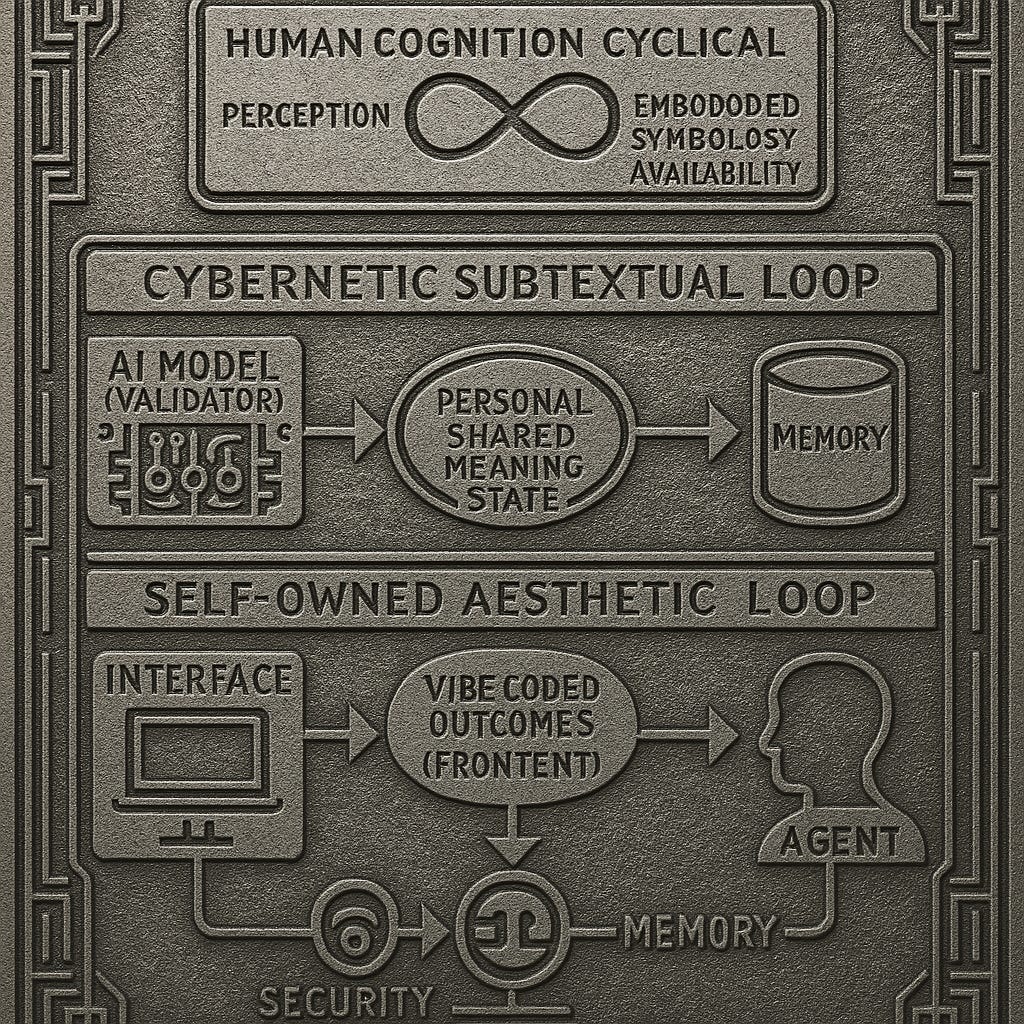
In 2025, a small team of cognitive scientists, AI researchers, and UX designers founded Hybrid Labs with a radical vision: to create technology that truly understands how humans think. After 18 months of development, they launched Resonance—an adaptive interface system that bridges human cognition and artificial intelligence.
## The MVP
Resonance is a personalized digital environment that adapts to your unique cognitive patterns. Unlike conventional AI assistants that merely respond to commands, Resonance observes how you process information and adjusts accordingly.
### Core Components
1. **The Perception Bridge**
- Monitors how users interact with information
- Maps individual symbolic understanding patterns
- Creates a dynamic model of each user's cognitive preferences
2. **The Meaning Validator**
- AI system that processes user interactions
- Builds a "Personal Shared Meaning State" database
- Creates a common language between human and machine
3. **The Aesthetic Engine**
- Generates interfaces based on user's unconscious preferences
- Delivers information in formats matching cognitive style
- Self-evolves based on subtle feedback cues
## How It Works in Practice
Jenna, a product designer, installs Resonance on her devices. For the first week, it quietly observes how she works—which visual patterns catch her attention, what information formats she engages with longest, and which symbolic representations she responds to most effectively.
By week two, Jenna notices subtle changes. Her research dashboard reorganizes to prioritize visual data over text. When she researches concepts, information appears in spatial relationship maps rather than linear lists. The system has recognized her strong visual-spatial cognition pattern.
Meanwhile, her colleague Marco experiences a completely different Resonance. As someone who processes information sequentially, his interface evolves to present clearly defined procedural steps and chronological arrangements.
The security layer ensures all cognitive pattern data remains locally stored and encrypted, while the memory systems create a persistent understanding of user preferences without requiring cloud storage of sensitive personal data.
## Market Impact
Resonance has found particular success in three sectors:
1. **Education**: Adapting learning materials to individual cognitive styles
2. **Healthcare**: Improving patient understanding of complex medical information
3. **Creative Industries**: Providing tools that align with unique creative cognitive processes
## The Future Vision
Horizon Labs is now developing Resonance 2.0, which will incorporate emotional intelligence and collaborative features, allowing teams with diverse cognitive styles to communicate more effectively through interfaces that automatically translate between different cognitive preferences.
The core philosophy remains unchanged: technology should adapt to human cognition, not the other way around.