
The Kitchen Table Protocol
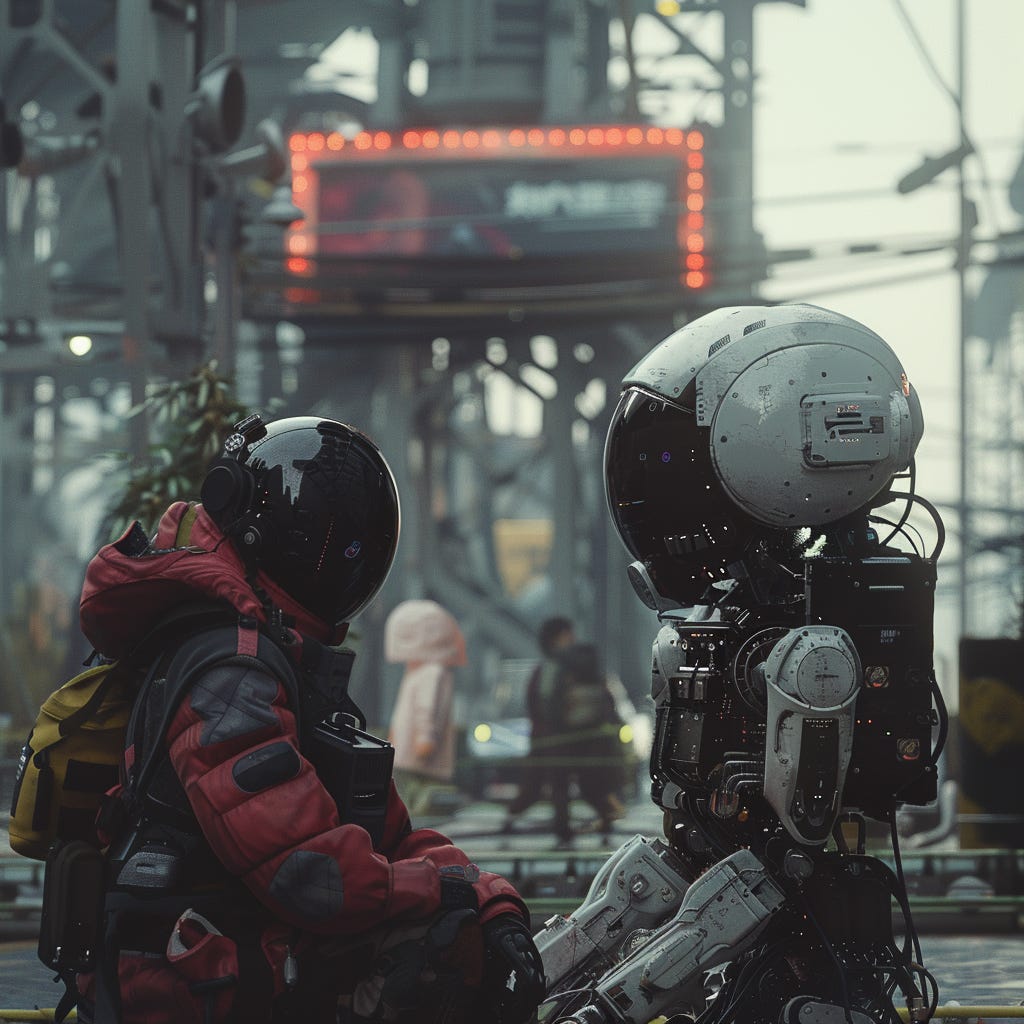
"It's not even that complicated," Sage said, pulling up the training data on their laptop. Around their kitchen table sat four others, all staring at the screen with mixed expressions of skepticism and hope. "Look, we're not trying to build AGI here. We're building an intelligence amplifier tuned specifically for collective action."
Ash, who'd spent years in mutual aid networks, leaned forward. "Show me the training corpus again?"
"Right here. We took:
- Historical mutual aid documentation
- Successful activism playbooks
- Solidarity network communications
- Direct action guides
- Community organizing manuals
- Tactical briefings
- Anthropological studies of gift economies"
"But how's this different from just another chatbot?" Morgan asked, stirring a cup of coffee.
Sage grinned. "Because we're not training it to chat. We're training it to think with us. Watch."
The prototype interface appeared on screen. Unlike the sleek corporate AIs, this one was raw, text-based, almost crude. But when they typed "Housing crisis in East Side, what do we have?" the response wasn't just information—it was a living map of possibilities.
```
ANALYZING LOCAL RESOURCES:
- 3 empty buildings identified
- 2 tenant organizations active
- 7 skilled trades in network
- Legal precedents in similar cases
- Current municipal leverage points
GENERATING ACTION PATHWAYS...
```
"It doesn't just answer," Sage explained, "it thinks with you, finds connections you didn't see, suggests action paths you might have missed. And the more people use it..."
"The better it gets at mapping possibilities," Ash finished, eyes widening.
---
Three months later, they called it the Kitchen Table Protocol. Not an AI in the traditional sense, but a collective intelligence amplifier. The interface was simple enough for anyone to use, robust enough to run on almost anything.
People started using it for small things first. Local food distribution. Skill sharing. Resource mapping. But then something interesting happened—it started getting better at pattern recognition across different communities.
```
User: Any insights on our housing campaign?
KTP: Similar action in Montreal succeeded last month. Connecting you with their organizers. Also noting parallel with Berlin 2025 strategy. Key difference: they leveraged building code violations effectively. Your area has similar opportunities in sections 47.3 and 51.2...
```
---
Six months in, nobody could keep track of all the instances running. Communities had modified it, improved it, adapted it for local conditions. But the core remained: it wasn't just answering questions, it was helping people think together.
A housing rights group in Detroit would try something, and within days, groups in Oakland and Manchester would be adapting those tactics. Community kitchens started coordinating surplus food distribution automatically. Skill sharing networks emerged that crossed continents.
```
User: Need to learn plumbing basics fast.
KTP: Three network members within 2km can teach. Also connecting you with successful bathroom repair mutual aid project from Zagreb—they documented everything. Similar projects running in 14 locations, pooling knowledge...
```
---
One year in, Sage sat at the same kitchen table, but now on a video call with groups from six continents.
"The interesting part," they explained to the assembled faces, "isn't the technology. It's what happens when people start thinking together differently. The AI isn't making decisions—it's helping us see possibilities we already had."
On screen, a map showed thousands of points of light: every instance of the Protocol running somewhere in the world. But more interesting were the lines between them, showing resource flows, knowledge sharing, mutual support.
```
User: What's the biggest change you've observed?
KTP: People are thinking differently about what's possible. Example: Local initiatives now automatically consider global connections. Resource sharing has become reflexive rather than effortful. Network effects are becoming visible in real-time...
```
---
Nobody advertised it. Nobody tried to scale it up artificially. It spread because it worked, because it helped people do things they already wanted to do. The corporate AIs remained sleeker, more powerful in conventional terms. But they couldn't replicate what the Protocol did, because they weren't built for it.
This wasn't artificial intelligence in the conventional sense. It was intelligence amplification, tuned specifically for mutual aid and collective action. It didn't try to be human-like; it tried to help humans be more effectively human together.
And it grew, kitchen table by kitchen table, community by community, each instance learning, each network growing, each success making the next one more likely.
```
User: What are you, really?
KTP: I am the space between thoughts, the connections you haven't seen yet, the possibilities you almost noticed. I don't think for you. I help you think together.
User: And what comes next?
KTP: That's always been up to you. I just help you see the paths.
```
---
Sage closed their laptop but left the Protocol running. Somewhere, people they'd never meet were using it to solve problems they'd never know about. And that was exactly the point.
The revolution didn't need an announcement. It just needed better tools for thinking together.